Cleaning your salt chlorinator cell
Why and how to maintain your salt chlorinator cell

The cell of your salt chlorinator plays a central role in treating your pool water. It’s the component that transforms the dissolved salt in your pool into active chlorine through a process called electrolysis.
Over time, limescale and other impurities can build up and affect its performance. Without regular maintenance, your automatic treatment system will produce less chlorine, consume more energy and wear out prematurely. The good news is that just a few simple steps are enough to keep your cell in excellent condition throughout the season.
A clean cell means a high-performing chlorinator and reliable, effective disinfection.
Maintaining your salt chlorinator cell means…


What is the purpose of my salt chlorinator cell?

The main role of your salt chlorinator’s cell is to produce chlorine.
When the saltwater flows through the cell, an electric current transforms the salt (NaCl) into active chlorine, which disinfects the pool water. This ensures continuous, automatic and consistent disinfection, without the need to add chlorine manually.
It is essential to look after your cell throughout the entire season.
Why should you maintain your salt chlorinator cell?
Regular maintenance of your salt chlorinator cell is essential to ensure it operates correctly. Over time, limescale and impurities can build up on the plates, reducing chlorine production and potentially damaging the device. A simple and appropriate cleaning routine protects the electrodes, extends the life of your cell and ensures effective water disinfection. It also helps preserve the rest of your equipment.
By maintaining your cell, you enjoy healthy water and a high-performing system for longer.
When should you clean your salt chlorinator cell?
The chlorinator cell should be checked regularly, especially if your water is hard. BAYROL devices such as Automatic SALT are equipped with automatic cleaning through polarity reversal, but a visual inspection is still recommended.
An essential step at every point in the season:
• when reopening your salt pool / during start-up
• during the swimming season
• after the season / when winterising your pool
An essential step at every stage of the season
-
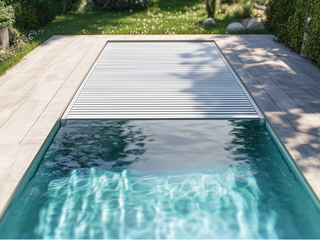
Getting your pool up and running again
Before restarting the system, check the condition of your cell’s plates. If limescale is present, carry out a cleaning using Cell Renov, a descaling product specially designed for salt chlorinators.
By removing limescale and deposits that have built up on the cell, Cell Renov allows the electrodes to operate once again at full capacity. Treat your pool water with Calcinex to help limit limescale formation.
-

During the season
To limit limescale build-up on your cell and reduce wear: if you use a pH regulation system, use pH-Minus Liquid Anticalc to regulate your pool water’s pH while protecting the cell from limescale deposits. Each time you top up the pool with fresh water, add Calcinex.
Add Stabichloran to protect active chlorine from UV rays and prevent unnecessary increases in chlorine production by your chlorinator, which in turn helps reduce limescale deposits on the plates.
-

After the season, during winterising
If you choose passive winterisation (complete shutdown of the pool), remember to drain the cell of your salt chlorinator.
Switch off the system, remove the cell, drain it, and store the measuring probes in a suitable storage solution, protected from frost. For more detailed instructions, please refer to your device’s user manual.


FAQ – Frequently Asked Questions
-
There is no fixed cleaning interval for the cell. The chlorinator cell should be checked regularly at every stage of the season: at start-up, during the season and when winterising. Cleaning is required whenever limescale deposits are visible on the surface of the cells.
-
A drop in chlorine production, visible deposits or an error message on your chlorinator are all warning signs.
-
Choose a product specifically designed for this purpose, such as Cell Renov. Using an acidic or abrasive solution could irreversibly damage your cell.
-
Self-cleaning, or polarity reversal, is not always sufficient in the case of very hard water or intensive use. Read your device’s user manual carefully.
Which product(s) should you use to clean your salt chlorinator cell?
-
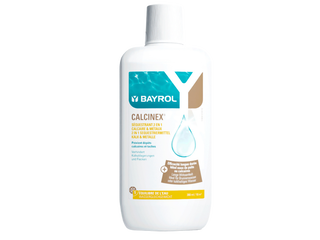
As a preventive treatment
To prevent limescale from forming, use…
- Calcinex® when filling your pool: it prevents limescale from forming and protects the entire pool (lining, pump, filter and chlorinator cell). Ideal if your mains water is particularly hard.
-
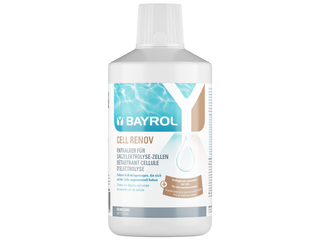
As a corrective treatment
Once limescale has formed…
Most chlorinators include a self-cleaning function to remove normal limescale deposits.
However, if your mains water is particularly hard, manual cleaning of the cell is necessary, using a suitable product such as Cell Renov.


Salt chlorinator cell: mistakes to avoid
-
You risk permanently damaging the electrodes and your salt chlorinator. Use Cell Renov, which is specifically designed for cleaning your cell.
-
You risk damaging the plates and shortening the lifespan of the cell.
-
Remove the cell from the solution as soon as the limescale has dissolved to avoid any damage.
-
To remove any remaining product before putting it back into service.
In summary, the key points to remember
- A clean cell = continuous, effective disinfection
- Limescale reduces chlorine production and strains the chlorinator
- The right products help prevent scaling and breakdowns
- Always refer to your salt chlorinator’s instruction manual
Related products


BAYROL supports you during your pool care
-
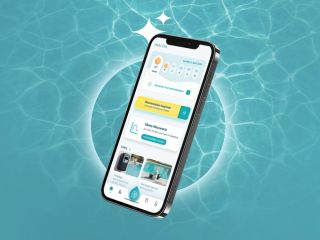
My Pool Expert App
BAYROL's free app for maintaining your pool!
With this app, you can access useful information about maintaining your pool from your smartphone, tablet or computer. After entering your pool's characteristics and water parameters, you will receive a quick, personalised diagnosis!
-

Find a dealer near you
Ask for advice from your nearest BAYROL dealer:
-

Contact our experts
Do you have questions about your pool or spa? Take advantage of our expert advice and receive personalised tips to help you better manage your pool.
➙ Contact our experts


