How does a salt chlorinator work in a swimming pool?

Many pool owners believe that a saltwater pool works “without chlorine”. This idea comes from the fact that they do not use chlorine tablets or liquid chlorine. In reality, however, the principle of disinfection is exactly the same: the water is still treated with chlorine, the only difference is how that chlorine is produced.
In a salt electrolysis system, a small amount of salt is added to the pool water, typically between 1.5 and 5 g/L. This salt is sodium chloride (NaCl). Inside the electrolytic cell, the dissolved salt is broken down by an electric current: sodium ions (Na⁺) on one side and chlorine gas (Cl₂) on the other. This chlorine immediately reacts with the water to form hypochlorous acid (HOCl), the same active form of chlorine used in traditionally chlorinated pools. Hypochlorous acid disinfects the water by destroying microbes, algae and impurities.
After it has acted, part of the chlorine is consumed, while the unused portion gradually converts back into salt. The amount of salt actually consumed is very small. In practice, any drop in salt concentration is mainly due to filter backwashing, water renewal or dilution caused by rainfall.
For the user, the difference is significant: you no longer add chlorine manually, the salt chlorinator produces it continuously, in a regular and automated way. The pool is therefore still disinfected with chlorine, but with much more stable treatment and far greater ease of use compared with manual dosing.
Advantages of a saltwater pool
-

Less maintenance, greater comfort
With an advanced salt chlorination system, chlorine production becomes fully automatic. The unit continuously adjusts its output via integrated Redox regulation, preventing both overdosing and underdosing, two common causes of water instability with manual dosing. This real-time control ensures consistent disinfection without the need for daily intervention.
Another key benefit is the near disappearance of the typical “chlorine” smell. This is due to the constant presence of free available chlorine in the water, provided the pH is correctly balanced. In reality, what is commonly perceived as a chlorine smell mainly comes from chloramines, compounds that form when disinfection is insufficient. With a properly adjusted salt chlorination system, or more generally an automatic dosing device, chloramine formation is significantly reduced, making swimming more pleasant and improving overall water quality.
-

Improved bathing comfort
The salt level is so low that it is barely noticeable, comparable to that of a tear and far below that of seawater. Many users therefore describe the water as softer and more pleasant, as this slight salinity, combined with consistent disinfection, helps reduce eye and skin irritation.
-
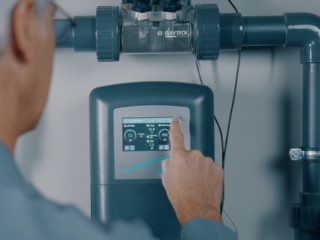
Improved water quality
Thanks to consistent chlorine production, the water maintains a stable level of disinfection and copes better with fluctuations caused by bather load or high temperatures. This stability reduces the need for corrective treatments, particularly shock chlorination. In most installations, automatic pH regulation also helps maintain reliable water parameters and further limits manual intervention.


Drawbacks and constraints of saltwater treatment
-
Risk of corrosion
Saltwater increases the risk of corrosion when metal components do not offer sufficient resistance. Salinity and the reactions occurring within the electrolysis cell can accelerate oxidation, compromising the durability of sensitive parts. Galvanised steel and lower-grade stainless-steel components are particularly vulnerable and should be replaced or adequately protected before considering a saltwater treatment system.
-
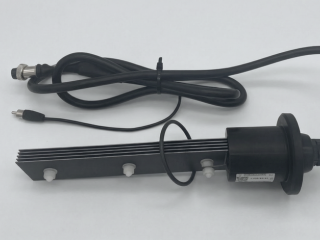
Cell durability and system maintenance
The electrolysis cell is a wear component: it typically provides around 6,000 to 7,000 operating hours, equivalent to 3 to 5 years before replacement, depending on the model and usage time.
A failure of the electronics or probes can lead to incorrect chlorine production. Regular professional checks, combined with manual testing of water parameters in line with the manufacturer’s recommendations, therefore remain essential.
-
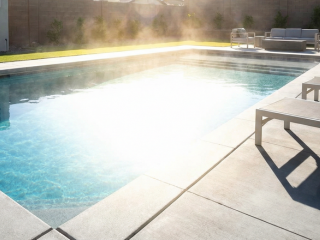
Impact of UV exposure on chlorine stability
Under strong sunlight exposure, hypochlorous acid breaks down rapidly under the effect of UV radiation. The chlorinator then has to produce a large amount of chlorine to compensate for this loss, leading to a temporary drop in Redox levels, sometimes even triggering an alarm.
To limit these fluctuations, several options are available: a more powerful cell, a higher salt concentration, longer filtration times, a slightly lower pH, and/or the addition of cyanuric acid to stabilise the chlorine (for example, using Stabichloran).


Common misconceptions about salt chlorination
-

“A saltwater pool is just like seawater.”
In reality, seawater contains up to 35 g/L of salt, almost twenty times more than a saltwater pool. In a pool equipped with a salt chlorination system, salinity is low and only barely perceptible.
-
“Salt chlorination works without chlorine.”
This is incorrect: salt electrolysis actually produces free chlorine from the dissolved salt. The treatment therefore remains chlorine-based. Only the method of chlorine generation changes.
-
“Chlorine produced from salt is more natural.”
In reality, it is the same chlorine (HOCl) used in any chlorine-based treatment. Only the method of production changes; the chemical nature of the disinfectant itself remains identical.
-
“With a saltwater pool, you no longer need any pool care products.”
This is incorrect: even with a high-performance salt chlorination system, it is still essential to monitor and adjust pH, total alkalinity (TAC) and stabiliser levels, and, depending on water quality and pool conditions, to add products such as anti-limescale agents, flocculants, and others as required.

What types of salt chlorination systems are available on the market?
Which salt chlorinator should you choose for your swimming pool?
Choosing a salt chlorination system means choosing a certain level of comfort and water quality. The real differences between units become apparent in everyday situations: intense sunshine, pH fluctuations, a cell beginning to scale up, or constant readjustments required with non-regulated models. Advanced systems automatically manage pH and Redox levels, protect the cell against limescale deposits and can be controlled remotely — features that entry-level salt chlorinators do not offer. The points below explain which functions truly determine water quality and how easy the system is to maintain.
The limitations of salt systems without automatic regulation
Basic systems only take into account the selected operating time and output. In real conditions, however, chlorine demand varies depending on the weather, sunlight and the number of bathers. The result is chlorine levels that are too low during periods of heavy use, too high at night, and a constant need for manual adjustments.
Redox-regulated systems automatically adapt in real time using a probe that measures the oxidation-reduction potential. This stabilises disinfection levels and significantly reduces the need for manual intervention.
pH: a key parameter for stable, properly disinfected water
Many pool owners underestimate how closely pH and chlorine efficiency are linked. Incorrect pH is the most common cause of green water (pH too high, ineffective disinfection), but it also leads to limescale deposits and excessive chlorine consumption. This is why a salt chlorinator without pH regulation can only operate at part of its potential and requires frequent manual pH corrections.
Salt chlorinator cells: standard vs self-cleaning – why limescale disrupts electrolysis
Salt chlorinators differ greatly in how they handle limescale build-up. On models without a self-cleaning function, polarity remains fixed and limescale quickly deposits on the electrolysis plates, especially in hard water areas. Chlorine production gradually decreases, and the cell then has to be cleaned manually with acid (for example using Cell Renov), increasing maintenance requirements.

Self-cleaning cells with polarity reversal automatically alternate the direction of the current, preventing deposits from adhering to the plates. As a result, chlorine production remains more stable, power consumption is reduced, and the cell’s service life is significantly extended. In hard-water areas, this type of cell is virtually essential to prevent scaling and reduce breakdowns.
Salt level: standard systems vs Low-Salt
Depending on the model, salt requirements can vary considerably. Standard salt chlorinators typically operate at around 3–5 g/L, whereas Low-Salt versions work from as little as 1.5 g/L, providing water that feels more neutral and is gentler on pool materials. This lower salinity, however, requires more powerful or more efficient cells to maintain the same level of disinfection.
Cell output: chlorine production in g/h – a frequently underestimated criterion
The main differentiating factor between salt chlorinators is their chlorine production capacity, expressed in grams per hour. Many manufacturers quote very generous pool volume ratings, but these figures only apply under ideal conditions: a covered pool, moderately warm water and low bather load. In summer, an undersized cell may run continuously, struggle to reach the Redox setpoint and ultimately lead to water quality issues, even though the unit is technically “working”.
By contrast, a correctly sized cell produces the required amount of chlorine using less output, responds more quickly to fluctuations and ensures consistent water quality. The right choice is therefore based on actual demand: pool volume, water temperature, bather load and UV exposure. In practice, allowing a 20–30% safety margin provides a reliable buffer.
Sensors, safety and user comfort
Salt chlorinators differ less in appearance than in the quality of their sensors and safety systems. Basic models, limited to simple power settings, do not detect a lack of flow or hazardous conditions within the cell. They may even continue producing chlorine without water circulation, encouraging the build-up of chlorine gas — a genuinely dangerous situation for both the installation and users.
Premium models are equipped with sensors that monitor flow rate, temperature and cell operation. If any parameter falls outside normal limits, the system pauses production and displays a clear message to guide the user.
Ergonomics also vary widely: some units rely solely on hard-to-interpret LED codes, while more recent models feature clear touchscreens, intuitive menus and, in some cases, Wi-Fi connectivity.
Ultimately, what really matters is not the number of features, but how accurately the chlorinator detects anomalies, adjusts its output and clearly informs the user.
Installation, maintenance and spare parts availability: a factor not to be overlooked
Salt chlorinators vary greatly in terms of installation and maintenance ease. Compact systems, where the cell and control unit are combined, take up little space but may require specific layout solutions in the plant room. Split-unit models offer greater flexibility and make cell maintenance easier.
Another key consideration is the manufacturer’s spare parts policy. Some brands offer cells, sensors and probes at reasonable prices with long-term availability, while others price replacement parts close to the cost of a new unit.
When total costs are assessed, it quickly becomes clear that a “budget” chlorinator can prove expensive in the long run: cells that fail regularly, a lack of local service support, and water quality that deteriorates and requires repeated manual correction. The purchase price therefore does not always reflect the true cost of ownership.
Salt chlorinators: what’s the difference between basic and premium models?
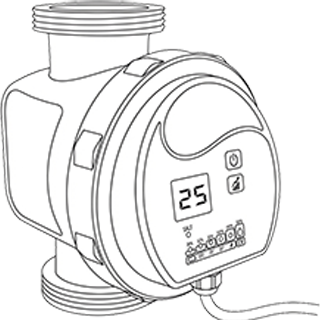 | 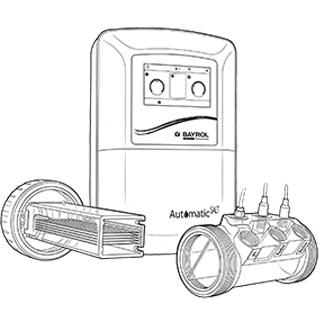 | |
|---|---|---|
Criterion | Entry-level salt chlorinator | Premium salt chlorinator |
| Chlorine production | Manual adjustment; dependent on weather conditions and pool usage | Automatic adjustment based on Redox measurement |
| Water quality | Fluctuations, risk of under- or over-chlorination | Consistent disinfection ensured by automatic regulation |
| Salt level | 3–5 g/L, higher salinity levels | 1.5 g/L (Low-Salt), virtually imperceptible |
| pH-regulation | No automation; rising pH levels and reduced disinfection efficiency | Automatic regulation that maintains an optimal pH level |
| Cell technology | Rapid limescale build-up, requiring frequent cleaning | Polarity reversal that limits limescale build-up, extending service life |
| Chlorination performance | Quickly reaches its limits during periods of high heat | Sufficient output even under extreme conditions |
| Sensors & safety features | Limited detection and basic safety features | Flow rate, temperature, salinity, gas detection, fault monitoring |
| Ease of use | LED status codes, manual settings | Touchscreen interface, clear messages, often with Wi-Fi and a mobile app |
| Maintenance | Frequent checks and regular cleaning | Reduced maintenance thanks to automation |
| Long-term cost | Affordable upfront purchase, but a shorter lifespan and reduced user comfort | Higher initial investment, with significantly greater durability and user comfort |
| Recommended use | Small pools, manual operation | Focus on comfort, intensive use, and minimal maintenance |
The solution that ticks all the boxes: Discover Automatic SALT
-
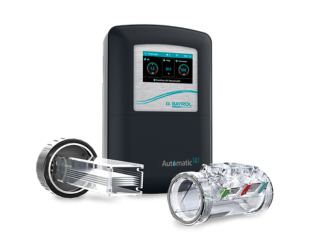
Redox, pH and Low-Salt technology
The trio for perfect water
With Automatic SALT, you move from a simple salt chlorinator to a truly autonomous water management system. Precise disinfectant control via redox regulation, automatic pH adjustment, and Low-Salt electrolysis from as little as 1.5 g/L ensure that the correct level of disinfection is maintained continuously, even as weather conditions, water temperature or bather load change.
The result: clear, healthy water at all times, with treatment that automatically adapts to the real conditions of the pool.
-

Smart&Easy Technology
Technology that simplifies installation and everyday use
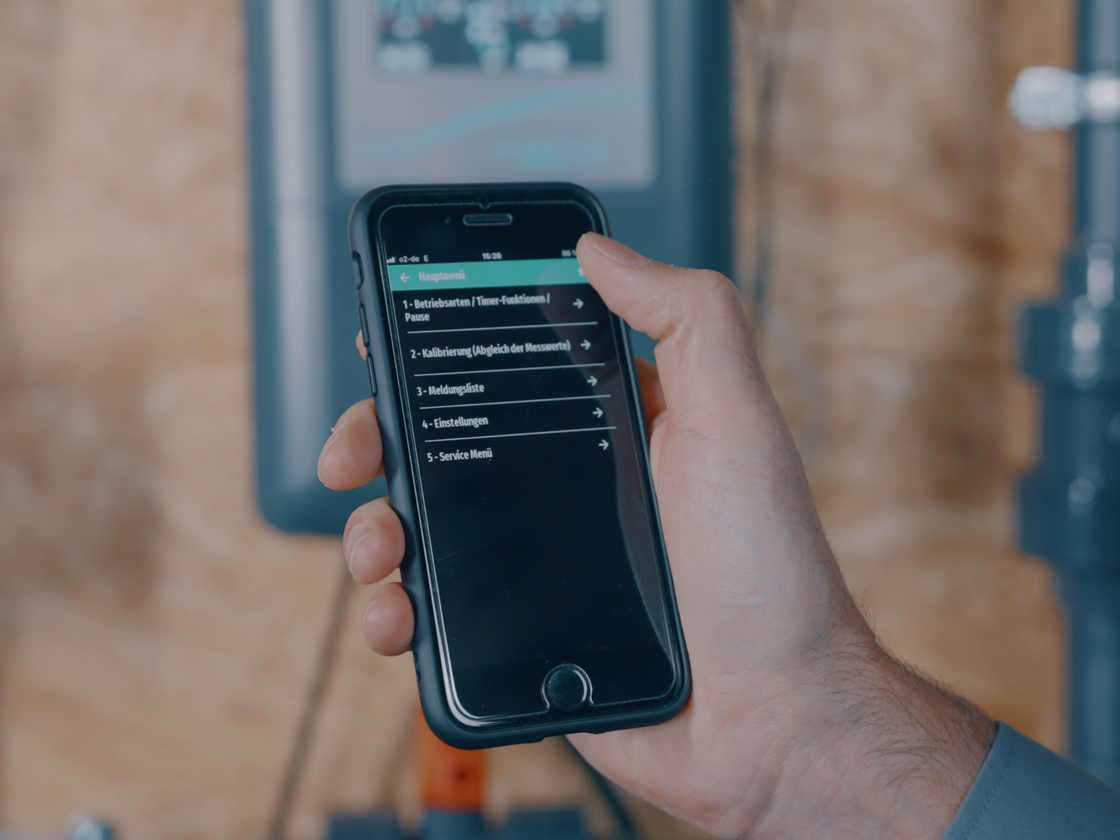
With Smart&Easy technology, users are guided step by step through installation, configuration and initial setup. From the moment it is switched on, the device checks the main water parameters, indicates any necessary adjustments and confirms when everything is ready. During operation, Automatic SALT continuously monitors pH, redox, temperature, salinity and water flow. Any anomaly immediately triggers a clear alert, accompanied by practical guidance to help restore normal conditions.
-

Premium electrolysis cell
Titanium cell, automatic polarity reversal and advanced sensors
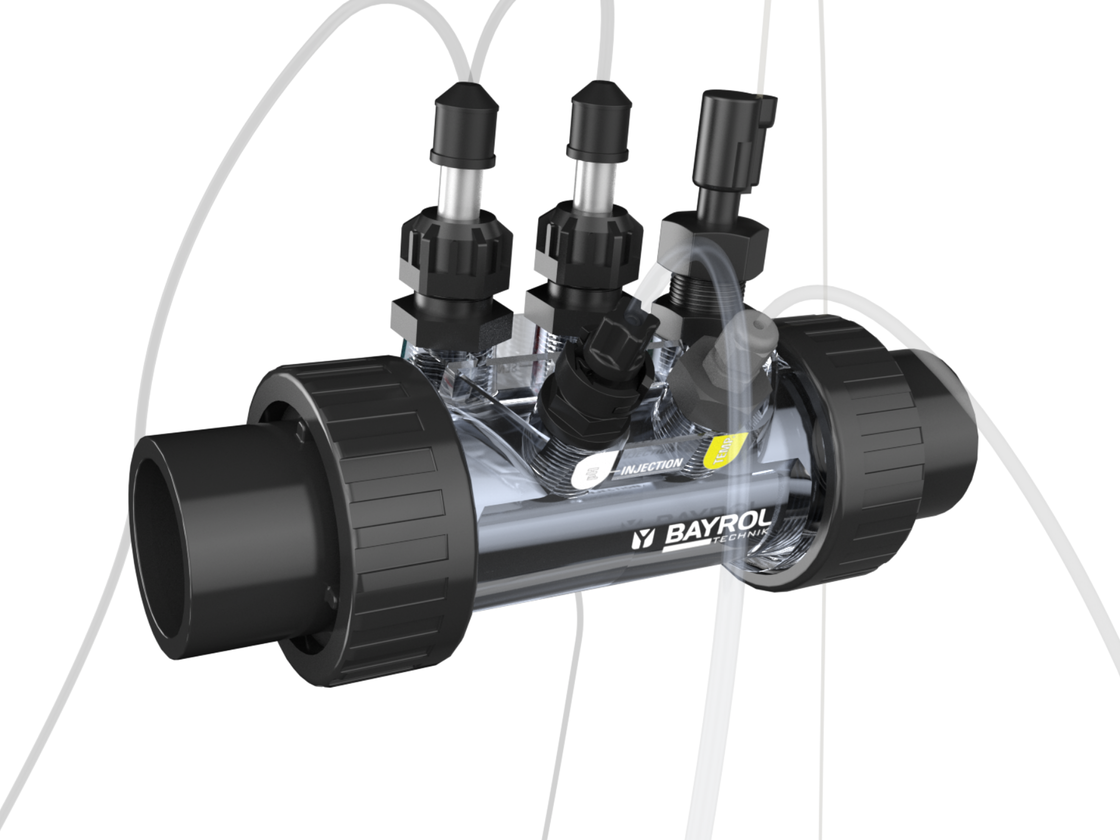
The electrolysis cell is made of titanium and coated with ruthenium to ensure a long service life. Automatic polarity reversal prevents limescale build-up and guarantees consistent performance season after season. pH is adjusted by a quiet yet powerful dosing pump. The system is completed by a paddle-type flow sensor, a temperature sensor, and a gas detector integrated into the cell.
-

Integrated Wi-Fi module
Control Automatic SALT remotely
Thanks to its integrated Wi-Fi, Automatic SALT can be controlled remotely from a smartphone or computer, with a complete overview of all settings.
For even more advanced management, the optional Smart&Easy Control Module allows you to control filtration, lighting and other pool equipment from the same interface.
-
3-year warranty
German reliability by BAYROL Technik
Automatic SALT comes with a 3-year warranty on the control unit and the cell (excluding wear parts), reflecting the confidence placed in the quality of the components, the longevity of the cell and the reliability of the electronics.


About BAYROL Technik
- 40 years of expertise
For over 40 years, BAYROL Technik has been developing and manufacturing solutions dedicated to the automatic treatment of swimming pool water in Germany.
- 3 Core commitments
Quality, ease of use and durability: three core requirements at the heart of every device, manufactured in Germany under strict quality control.
- Comprehensive service 360
BAYROL Technik supports its users through an expert distribution network, high-quality after-sales service, and digital tools designed to make everyday use easier.
Automatic SALT in images


Frequently Asked Questions (FAQ)
-
Can food-grade salt be used?
No. Table salt contains additives (iodine, anti-caking agents) that are incompatible with electrolysis. They interfere with chlorine production, accelerate cell wear and may stain the liner. A dedicated pool salt must be used.What is the minimum required purity?
The salt must contain at least 99.8% sodium chloride (NaCl). Insufficient purity promotes scaling, reduces efficiency and shortens the lifespan of the electrolytic cell.Does the salt need to be non-iodised?
Yes—this is essential. Iodine interferes with the electrolysis reaction, can damage the cell and distort disinfection readings. Pool salt is always guaranteed to be iodine-free.Granules or pellets: which should you choose?
Granules are recommended: they dissolve quickly and evenly. Pellets dissolve slowly and can create areas of high salinity that may cause liner discolouration.What salt concentration is required?
- Standard salt chlorinator: 3–5 g/L
- Low-salt chlorinator: from 1.5 g/L
The exact value always depends on the manufacturer’s recommendations.
How much salt for a 50 m³ pool?
- 3 g/L → 150 kg
- 4 g/L → 200 kg
- 1.5 g/L (Low Salt) → 75 kg
Accurate dosing is essential to avoid production issues or system alarms.
Automatic SALT
Continue reading...


