How to Pick the Right Pool Robot for Your Pool?
Expert guide: essential technical criteria and common mistakes to avoid

The arrival of robotic pool cleaners has fundamentally changed the way swimming pools are maintained. They no longer simply “clean the floor”: they now play a direct role in water clarity, treatment stability and the long-term wear of the filtration system.
Yet the differences between models are still poorly understood, often leading to unsuitable choices—particularly for pools with complex shapes or saltwater systems. This guide breaks down how pool robots really work, their technical limitations, and the criteria that should genuinely guide your decision, beyond marketing claims.
The Three Main Types of Pool Cleaners
-
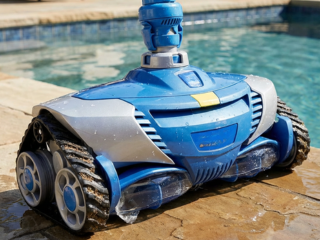
Hydraulic Pool Cleaners
An economical option, but dependent on the pool’s filtration system
A hydraulic pool cleaner operates solely using the suction power generated by the pool’s filtration system. Its performance therefore depends directly on three key factors: the pump’s actual flow rate, the level of clogging in the filter, and the pressure available in the hydraulic circuit. As soon as one of these elements drops, the cleaner quickly loses both mobility and suction efficiency.
In a small, straightforward pool (rectangular shape, flat bottom), this type of cleaner can be sufficient. However, its limitations soon become apparent. As the filter begins to load up with debris, suction power falls sharply—and cleaning quality declines accordingly. The cleaner then struggles to maintain enough grip to climb the walls and properly scrub the waterline. As a result, vertical surfaces are only partially cleaned, becoming ideal areas for algae to develop and soil building up more quickly.
Finally, using a hydraulic pool cleaner requires a certain amount of preparation. Before cleaning can even begin, the hose must be fully primed with water to prevent air entering the system, correctly connected to the suction point, and the valves in the plant room adjusted to achieve the required flow rate. These steps are essential for proper operation but represent a noticeable setup time before each cleaning cycle.
-
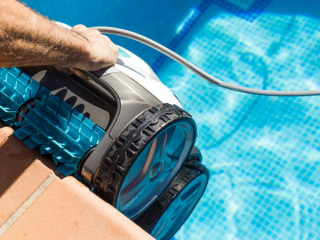
Electric and Cordless Robotic Pool Cleaners
The go-to choice for complete cleaning
Motorised, fully autonomous and equipped with their own suction system, electric and cordless robotic pool cleaners deliver comprehensive cleaning of the entire pool: floor, walls and waterline. However, their real performance does not depend on motor power alone, but on three technical factors that are often overlooked.
Suction flow rate (m³/h) influences how quickly debris is collected, but it does not, on its own, guarantee the capture of fine particles. On some models, a high flow rate can even be ineffective if the internal filtration is not designed to retain micro-impurities.
Navigation technology—whether random, gyroscopic or based on mapping—determines how thoroughly the pool is covered. Controlled movement avoids missed areas and limits unnecessary repeat passes, mechanically improving the overall efficiency of the cleaning cycle.
Filtration fineness (µ) depends on the quality of the filter media. Standard filter baskets typically offer a threshold of 50–60 µ, which is insufficient for mineral dust or very fine organic residues. High-performance models reach 5–10 µ, the level at which the robot genuinely starts to act on the root causes of cloudy water or algae-prone conditions.
In pools where water balance issues are frequent (unstable pH, insufficient disinfectant, heavy bather load, etc.), this ability to capture micro-particles becomes a decisive factor. It helps reduce the organic load and significantly lowers the risk of algae development.
-
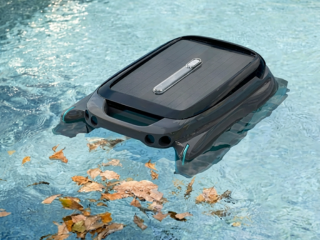
Solar Pool Cleaners
A complementary solution, not a replacement
Floating solar pool cleaners operate exclusively at the surface, where they collect pollen, dust, greasy films and other light debris. By removing these contaminants early, they help reduce the amount of pollution that would otherwise end up in the filter or gradually settle on the pool walls.
In pools exposed to wind, surrounding vegetation or heavy use, this surface pre-collection can help stabilise water quality by reducing the organic load between full cleaning cycles.
However, their scope remains limited. Unable to clean the pool floor, walls or hard-to-reach areas, they do not remove embedded deposits and can in no way replace an electric robotic cleaner. Their autonomy also depends on sunlight levels: under cloudy skies, early in the morning, late in the day or in shaded areas caused by covers, enclosures or dense vegetation, their power drops and navigation becomes inconsistent.
In practice, a solar pool cleaner is a useful supplementary tool for controlling the build-up of floating debris, but it is not sufficient on its own to keep a pool clean. It proves most effective in outdoor pools heavily exposed to pollen, airborne dust or surface films, provided it is used alongside manual cleaning of the pool floor and walls.


What Is the Best Pool Cleaner?
Actual Cleaning Performance
A robot’s performance is not defined by marketing claims, but by three measurable factors: actual cycle duration, internal hydraulics, and the navigation algorithm. A genuinely efficient model must be able to cover the entire pool floor within 1.5 to 2 hours, without leaving untreated areas, and handle corners, slopes or submerged steps without losing traction. The ability to maintain stable contact with the walls, especially on smooth or slightly soiled surfaces, is often the real differentiator between two robots that appear similar on paper.
When a robot consistently leaves 15–20% of the pool floor uncleaned, this residual build-up mechanically increases the organic load in the pool. With the same water treatment regime, this results in higher disinfectant consumption and water that is more prone to cloudiness or turning green. A high-performance robot therefore contributes indirectly to water treatment stability, by reducing fluctuations in the organic load that the disinfectant has to manage.
Brush Type and Surface Compatibility
The choice of brushes directly affects grip, the ability to dislodge deposits, and long-term durability:
- Polyester shells and tiled pools: rigid PVC brushes or high-adhesion foam brushes are recommended, as they are essential for maintaining traction on smooth surfaces.
- Liner pools: both PVC and foam brushes can be used, but foam brushes tend to wear faster, as they work more in compression and trap a higher proportion of fine debris.
Brush wear rate mainly depends on three factors:
- Water hardness: high calcium hardness promotes scale build-up, stiffens brush surfaces and reduces grip.
- Abrasive particles: sand, mineral dust and pollen deposits create an abrasive effect that accelerates material erosion.
- Total operating hours: robots used 4–5 times per week will naturally wear much faster than models used occasionally.
Filtration and Basket Capacity
This is the decisive criterion—and paradoxically one of the least highlighted. A small-capacity filter basket, around 3 litres, becomes saturated very quickly in pools surrounded by vegetation, immediately reducing internal flow rate and therefore the robot’s suction efficiency.
Filtration fineness is the key technical parameter: only a mesh size of 5 to 10 µ can capture fine dust and micro-organic debris, which are major contributors to water cloudiness and algae growth.
The combination of a large-capacity basket with fine filter media represents the optimal setup, ensuring longer cycle autonomy, sustained flow rate and consistently high cleaning quality.
Programming and Connectivity
The benefit is not just convenience: programming has a direct impact on water balance. Regular cleaning cycles prevent the build-up of organic matter and reduce the amount of contaminants the disinfectant has to oxidise. The result is fewer fluctuations in chlorine levels and more stable disinfection.
Choosing the Right Robot for Your Pool
-
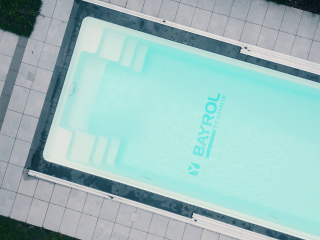
Matching the Robot to Your Pool’s Shape
The shape of the pool imposes real constraints in terms of navigation, grip and stability—factors that are rarely detailed in technical datasheets. In a standard 8 × 4 rectangular pool, most robots provide acceptable coverage.
As soon as the pool features free-form shapes, steep slopes or complex areas, a robot equipped with a gyroscope or onboard mapping becomes essential to avoid blind spots. The difference is immediately noticeable: a poorly guided model repeats the same paths, while an intelligently steered robot optimises its movements and maintains consistent progress.
Submerged steps are a special case. Only a few models, designed with an adapted centre of gravity and effective inclination sensors, can climb onto them without slipping. The vast majority fail in this area, even when they are capable of climbing vertical walls.
For saltwater pools, material quality becomes a decisive criterion. Stainless steel fasteners, fully encapsulated motors and well-protected electronics are essential to prevent galvanic corrosion, which quickly affects entry-level models.
The most common mistake is choosing a so-called “universal” robot that leaves 10–20% of the pool untreated. Over the course of a season, these uncleaned areas become reservoirs for deposits and algae, largely undermining the value of the investment.
-

Budget: what the price doesn’t tell you
A robot priced at €300–400 can be suitable for a small, simple pool with limited exposure. However, as soon as pool complexity increases or usage becomes heavy, its lifespan drops quickly: three seasons is a realistic average under intensive use.
By contrast, a robot in the €900–1,200 range, properly matched to the pool and equipped with fine filtration, can last 5 to 8 years and often proves more cost-effective than replacing entry-level models multiple times.
-
Installation and Water Quality
An electric robotic cleaner requires a power supply protected by a suitable residual current device (RCD), as well as a socket positioned at a safe distance from the pool. Storage should be dry, well ventilated and protected from frost, in order to preserve the electronics and seals.
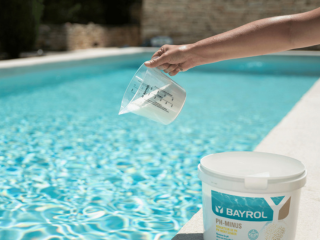
Water quality has a direct impact on both performance and component wear. In hard water (>25 °f), limescale gradually builds up on the brushes, reduces their flexibility and compromises grip on the pool walls. Regular use of a scale sequestrant and maintaining the pH between 7.0 and 7.4 help extend brush life, protect the impeller and ensure consistently effective cleaning.


FAQ – Frequently Asked Questions
-
No. No robotic cleaner can properly brush every complex area (corners, steps, submerged ledges), nor can it prevent limescale build-up, which is linked to high pH or hard water. Periodic manual brushing remains essential, especially during hot weather or after storms, as these conditions promote algae growth.
-
Particles smaller than 10 microns pass straight through standard filter baskets. In pools prone to algae, phosphates or floc residues linked to salt electrolysis, only very fine filtration (5–10 µ) or the use of a flocculant such as Superflock Plus allows these particles to be captured effectively.
-
Yes, but compatibility with a saline environment is essential. Salt electrolysis generates salt residues and sometimes calcium particles released from the cell, which increase the cleaning load on the robot. Models that are sensitive to corrosion will age prematurely under these conditions. Regular monitoring of salt level and pH, combined with scale prevention using a sequestrant such as Calcinex, is fully compatible with frequent use of a robotic cleaner and helps preserve its performance over time.
-
The most common causes are:
- Cables becoming tangled due to the absence of an anti-twist system
- Random navigation that is not suited to free-form pool shapes
- Loss of grip on the walls caused by worn brushes or very smooth surfaces
Poor water balance (high pH, biofilm, greasy deposits) can also reduce mechanical efficiency. This reinforces the importance of corrective or enzymatic treatment to lower the organic load and restore effective cleaning performance.
-
Malfunctions in robotic pool cleaners are often caused by power supply issues or clogged components. Start by checking that the unit is receiving power correctly: a faulty socket or a damaged cable will immediately prevent it from operating.
A saturated filter is another major cause of malfunction. When the debris basket is full, the impeller loses efficiency and the robot’s movement slows significantly. Regularly rinsing the filter with clean water helps maintain optimal suction.
Drive wheels can also become blocked by small stones or leaves lodged in the mechanisms, preventing the cleaner from moving at all. Routine maintenance and visual inspection of the mechanical parts help prevent most of these technical issues.
-
- 50–100 µ: sufficient for routine cleaning in a simple pool.
- 20–30 µ: recommended for pools exposed to trees or pollen.
- 5–10 µ: essential for pools prone to cloudy water, persistent algae or repeated deposits on the pool floor.
-
No. After shock treatment, the pool should only be used once the chlorine level has dropped below 3 mg/L. Running a robotic cleaner too early can damage certain components.
-
Three main causes:
- Insufficient main filtration (filtration time too short, clogged filter).
- Incorrect water parameters: low alkalinity (TAC), drifting pH, disinfectant level too low, etc.
- Lack of flocculation in water rich in fine particles or metals. A robotic cleaner cannot correct an imbalance in water treatment.
Zodiac, Dolphin, Polaris, Aiper, Beatbot, Intex pool robots… it all depends on your pool
Choosing a pool robot is never simply a matter of budget or visual preference. The right choice depends on a combination of technical factors: pool shape, surface type, disinfection method, the amount of debris to be managed, and the level of automation you expect.
A poorly matched robot creates a double cost: incomplete cleaning, higher disinfectant consumption, and increased build-up of deposits or algae. By contrast, a robot that truly matches the technical reality of the pool plays a decisive role in overall balance—lower organic load, more efficient filtration, consistent mechanical cleaning and reduced pollution that would otherwise drive up disinfectant use.
In short, a pool robot is not an accessory; it is part of the water treatment chain. Investing in an efficient, well-suited model means fewer manual interventions, more stable water parameters and a longer service life for key equipment such as the filter, pump and salt chlorinator.


